DEEP FUTURES:
Possible, preferred and alternative visions of tomorrow. Now.
It's the future, Jim, but not as we know it... There's more to tomorrow than robots, flying cars, and a faster internet. 22C+ is all about Deep Futures, futures that matter. Welcome to futures fantastic, unexpected, profound, but most of all deeply meaningful...
“The universe is not only stranger than we think, but it is stranger than we can think”, said biologist J.B.S. Haldine (and don’t ask me why he called himself “JBS”). One thing that one immediately begins to understand when one sets off to explore the frontiers of life and intelligence, is that the dry mechanistic world of textbook science is a manufactured delusion. The situation reminds me of the dried butterflies stuck in old books. Beautiful in a sense, but their very life and soul has been sucked out.
The universe is an enchanting and mysterious place, wondrous and exciting and terrifying all in equal measure. The depth of the universe is simply far, far beyond the comprehension of our tiny human minds. Yet mainstream science insists that only those things which can be measured and quantified are real.
Empirical Philosopher David Hume once wrote:
If we take in our hand any volume; of divinity or school metaphysics, for instance; let us ask, Does it contain any abstract reasoning concerning quantity or number? No. Does it contain any experimental reasoning concerning matter of fact and existence? No. Commit it then to the flames: for it can contain nothing but sophistry and illusion.
It is all too easy to confuse the model with world, the map with the territory. So we get classrooms full of dry text books, and a universe of dried butterflies.
Dried butterflies do not fly. They do not fly because they are dead, reduced to the material substrate of their physical form.
Consciousness is by far the most fascinating quality and experience in the universe. Unfortunately science has made a rather belated start in attempting to understand consciousness. Twentieth century psychology didn’t help much by insisting that consciousness didn’t exist, or just wasn’t that important.
The universe is indeed wondrous, and human beings have at their avail a cornucopia of experiences which are yet to appear on the map of dominant scientiifc inquiry. In my own journey I have chased UFOs along the East Coast of Australia, soared to the serene voice of angelic messengers, and experienced far journeys out of the body.
The universe is a mystical place. There is much that is unknown, or even beyond our knowing. As surfers of the frontiers of mind (and ultimately evolution is such an adventure) it is our destiny to explore these realms. For curiosity and enquiry are inbuilt into the human psyche. In purely Darwinian terms, a species which is not inquisitive is quickly an extinct species.
Yet we can go too far in this expansion of knowledge, of boundary.
In my previous post I mentioned using the Feeling Sense in research, particularly when reading a book. Here’s a little more about that cognitive capacity.
Feelings are an essential part of thinking. Case studies from science show that people who lose the capacity to feel emotion become greatly impaired in their capacity to make intelligent choices. Yet many people still believe that when they make choices they are relying purely upon logic.
What is more, some intuitive subtle feelings emerge from the extended mind (consciousness beyond the brain), and these feelings can help us make wise choices.
I like to describe intuition as feminine, becasue it is a softer form of cognition than rational ways of knowing. It requires a letting go, a receptivity. It requires trust in something beyond the control of the conscious mind.
Mainstream education and western society in general is dominated by male energy, or patriarchy. 'Control and power' dominate such societies, and subtle intuition is largely alien to them. Unfortunately I cannot report east Asian cultures are any better in the modern age. They too have lost touch with their spiritual roots, to make a broad generlalisation, and their education systems are dominated by dry, repetitious, soul numbing rote learning. I should know - I have taught in such systems for over a decade.
The following is an extract from my book, Sage of Synchronicity. The INI Tools referred to are methods for tapping into intuition.
Developing the Feeling Sense
This is the ability to feel the energy within people, things, and situations, including the outcomes of intended actions.
The Feeling Sense consists of the subtle feelings that are provided by intuition. This is an absolutely crucial INI Tool, and the one that you will use the most often as you apply the knowledge in Sage of Synchronicity. The good news is that it is also quite simple. The Feeling Sense is innate, and anybody can learn to use it. I have taught people to use the Feeling Sense in two minutes flat.
As children we were better at employing the Feeling Sense, but as we get older, our modern education systems diminish this capacity, because of the delimiting way we are taught to think. Not to fear, however, as the Feeling Sense simply remains latent, and never disappears. All you have to do is learn how to turn on the tap again.
The more you become comfortable with looking within yourself, the easier it will become to distinguish amongst your many subtle feelings. You have to learn the difference between a “true” intuitive pull and other competing voices of the psyche - the ego, desire, wishful thinking, fear of the unknown, and so on. This is not really something that can be taught from a book like this. It is something you learn by trial and error.
You can use the Feeling Sense to pull data from people, objects, places, futures and pasts. As far as I am aware there are few limits. It truly is the doorway to the Akashic Field of Hindu lore, that part of the intelligent universe which contains a reservoir of infinite knowledge.
Here are a few possible applications.
People. Imagine reaching out with your hand and into the body of the person you wish to “read”. Then just let go and allow that person’s thoughts and feelings to move through you. Alternatively, you can imagine your body merging with theirs, repeating the same process. Always let go of the person as you finish the process. Otherwise, you may find your energy entangled with theirs.
Objects. Pyschometry occurs when you reach out with your mind to touch an object and feel the energy within it. Use the same process as for people, as described above. This is something that is relatively easy to do.
Places. Imagine moving out of your body and finding yourself in the place you want to know more about. Here you are looking for any feelings about the place. Of course, you may get images of words coming to you. If so, take note of them.
Futures. The future is not set in stone, but you can get a sense of probable futures. The further away in time, and more small-scale the event, the less predictable it is. For major events, such as economic shifts or ethnic conflicts, the results are more reliable.
To sense a possible future, feel yourself moving into the future choice you are thinking of making (e.g. accepting that job). What does it feel like? You can use this to imagine the futures of career choices, products you buy, places you visit and so on.
Pasts. Generally speaking, the past is set; however, the way that people relate to their past can have a great effect on the energy of the past as it is represented in the present. You can read another person’s past, in precisely the same way you read another person’s energy in the present (see above).
As you move your energy outwards and into theirs, you are generally picking up the emotional experience of the past event, rather than the literal event itself. Any emotional energy that is trapped in the psyche of a person is relatively easy to read, as emotional energy is “loud”.
The following example illustrates the Feeling Sense well.
At one time I had a slightly problematic situation. I was living in Hong Kong, and had decided not to renew the contract at the school where I was working. No new position emerged by the time I finished my job, and I was left with just a few weeks to find a new one. I was undecided whether to stay in Hong Kong, or return to Australia. It was a big decision, so it caused me some stress.
What I did was put the question out to the universe in prayer. The next day I sat down on the toilet (a great place for inspiration!), thinking of nothing in particular. Suddenly the words from the chorus of a song from the 80s band the Traveling Wilburies came into my mind. The song, and the words were At the End of the Line. After many years of working with such guidance, I knew exactly what it meant, immediately. There was a job advert I had seen two days before from a school at the very end of the train line in eastern Hong Kong. I had been unsure about whether to apply, but when those words came into my mind, I felt a certainty within myself. I rang the school and went for an interview. It was the school holidays, so there were no students around, no classes to check, and no kids’ faces to look at as a guide to the energy of the place. But as an office assistant showed me around the school, I was filled with a very positive feeling. There was something almost feminine about the energy of the school, a very rare thing in Hong Kong’s hyper-competitive education system! There was just a good vibe about the place.
As it turned out, I was offered a job. Based solely on my positive feelings, I accepted it. I just knew that I would fit in there, and that I would be treated well.
My intuition turned out to be spot on. It was indeed a good place to work, and the students and the staff were the best I’d ever worked with.
A good way to begin honouring The Feeling Sense is to regularly repeat the following exercise. Think of a decision you want to make, one that involves two or three possible options (choose a new one each time you do this). Write each option down on a separate piece of paper, and sit with the papers in front of you. Breathe deeply and relax. Ask yourself one question about the choice, e.g. “Which of these options is the best for my Spirit”, or “Which of these options is most likely to be successful” (be careful - these are not the same thing). Then place your non-dominant hand over one of the papers/options. Allow yourself to get a feeling about each option, in turn. You may get a subtle sense of excitement. If it feels “exciting”, it is a good bet that there is good energy on the option. This process is a little like the eighteenth and nineteenth century Romantics’ merging of subject and object (they believed the knower could merge with the thing they were trying to know). You can imagine yourself connecting with the choice (the place, the object, the person…), and sensing the energy of it.
The more you honour your intuitive feelings, the more they will speak to you. This really is too valuable an advantage to pass up. Don’t ignore this simple tool. It can cut a lot of hassle out of the decision-making process, while saving much time and energy.
For the most comprehensive outline of how to use the intuitive mind during research, my ebook How to Channel a PhD will tell you everything you need to know.
As promised, here it is…
If you really want to know a book, feel it first.
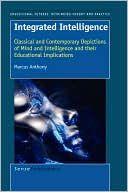
This is the essence of a particular approach to reading and studying which I have developed. It’s part of an educational philosophy which I call the Integrated Inquiry. This method combines traditional left-brain learning methods with right-brained, holistic tools. It’s grounded in the theory of Integrated Intelligence. Sceptics might say that means its not grounded at all, but I have applied these methods myself, and found them extremely useful. I will be outlining them in more detail in the book The Professor's Other Brain, which is some months away from being published. In the meantime here is a very readable and practical article I wrote about Integrated Inquiry, for the Open Information Science Journal.
The founding principal of Integrated Intelligence is that mind is non-local, and connected to a greater transpersonal mind. Biologist Rupert Sheldrake calls this the extended mind, and so do I. Information from that greater mind is processed by the brain at all times, even though most people are not aware of it. The extended mind can bring forth information from past, present and even future. Systems theorist Ervin Laszlo has described this well in his books The Akashic Mind, and The Akashic Experience. The Akashic field is a concept from Indic lore, and it states that the individual minds of human beings like you and I mind are connected to an all-knowing c0osciouisness. Everything that has ever happened in the history of the universe is recorded in the Akashic field, according to the mythology.
My experience as a man who has been using Integrated Intelligence over a couple of decades leads me to conclude that the extended mind is a fact, and all people can learn to tap into it.
One of the more interesting UFO sightings in China. This photo was taken in Hangzhou, near Shanghai, according to the China Daily. Officials said the event has a military connection., and will make an announcement later. Rumour has it that officials pumped several tonnes of swamp gas into the sky to reassure disturbed onlookers.
Certainly it looks to be a very physical object. I have to say though, that the object looks rather terrestrial compared to what I saw in my own UFO sightings several years ago.
SHANGHAI - An unidentified flying object (UFO) disrupted air traffic over Zhejiang's provincial capital Hangzhou late on Wednesday, the municipal government said on Thursday.
Xiaoshan Airport was closed after the UFO was detected at around 9 pm, and some flights were rerouted to airports in the cities of Ningbo and Wuxi , said an airport spokesman, who declined to be named. The airport had resumed operations, and more details will be released after an investigation, he said. A source with knowledge of the matter, however, told China Daily on Thursday that authorities had learned what the UFO was after an investigation. But it was not the proper time to publicly disclose the information because there was a military connection, he said, adding that an official explanation is expected to be given on Friday.
For more details: http://www.chinadaily.com.cn/china/2010-07/09/content_10084698.htm
For the most comprehensive outline of how to use the intuitive mind during research, my ebook How to Channel a PhD will tell you everything you need to know.
How do you feel a book? It's not a dumb question. I managed to gain a doctorate by feeling a lot of books, and I even wrote a couple of books by feeling them.
The short answer is that you feel a book by using the intuitive mind, or what I call Integrated Intelligence, tapping into the extended mind, and accessing information through intuitive feelings. It's a process which combines accelerated learning, brain plasticity, and research into the frontiers of human intelligence. So, instead of spending ten hours reading a text book, I just stick it to my forehead and feel it. It sure saves a lot of time!
OK, that was a slight exaggeration. But it does contain elements of the actual process. You can read more about it in tomorrow's post, "How to Feel a Book". Students and researchers will find it particularly useful.
The theory of natural selection is undoubtedly one of the greatest theoretical formulations in human history. However my sense as an intuitive is that it is not quite right, or perhaps a better way to put it is that it doesn’t go far enough. Today I present you with a little food for thought. This is purely a philosophical issue, but one that has important implications for evolution and human futures.
There comes a time in most people’s lives when they are confronted with bullying. The fact is that there are a lot of people out there who are just not very nice. In fact probably about 3.6 percent of the adult American population has anti-social; personality disorder, according to psychiatric-disorders.com. These people are also referred to as sociopaths or psychopaths.
The defining traits of antisocial personality disorder are a disregard for the wellbeing of others, as well as a tendency to violate their rights. Some common characteristics of psychopaths include a tendency to:
engage in violent acts and fights
feel no guilt or remorse for his or her actions
have no concern for individual safety or the safety of others
lie or deceive consistently
regularly break the law
steal.
They are also typically angry, self-interested and arrogant. Even so, some sociopaths may seem charming or even flattering. Needless to say, the psychopath merely uses these social tools to manipulate people for selfish ends. (source)
Unfortunately psychopaths love power, and it is commonly stated that leadership and power roles are attractive to those with psychopathic tendencies. This means that there is a reasonable chance that the boss is quite literally “psycho”. While this won’t come as a surprise to many experienced workers, it is a sobering thought. As a rough estimate, probably 5-10-percent of bosses may have antisocial personality disorder.
What do you do when you find yourself in a position of subordination to a genuine bully? No doubt you will get many suggestions from friends or online sources. However my particular interest in this phenomenon is from the perspective of someone who is on a soul journey. I’ve used the term “champion of the soul” a few times recently, and here I am going to suggest some general principles which can help a person who is dealing with a real bully. My emphasis here is upon seeing the situation as a growth experience, and as stepping stone to greater empowerment. The following should be considered as the advice of someone who has had several experiences in the area, and who has attempted to apply spiritual principles to those situations. Feel free to make observations or distinctions in the comments section, below.
As an excellent exemplar, please allow me to refer to a tale which I outlined very briefly in my book Sage of Synchronicity - only in a little more detail here. This will help me explain the preferred processes in real-world terms. Unfortunately I cannot explain here the full process. That would really require direct exploration in a workshop or one-on-one counseling. Nonetheless, you will be able to get the essentials.
In 1996 I was a fairly naïve and shy 30 year old guy who had just landed his first job overseas.
Please note: I use the masculine pronoun to describe the Champion of the Soul here, but it is merely for convenience.
The idea of the champion goes way back into pre-history. The champion was brave, strong, ready to fight, and always, always male. He knew how to be tough, and he knew that expressions of emotional vulnerability were unacceptable. The champion won the applause of the people by fighting for them, or standing up against tyranny. There was an ethical code, of course. The most loved champions were moral. They knew the difference between right and wrong. Hitler, Sadam Hussain and Attilla the Hun were all very brave men. But they were also demonic. They crossed the line, and had little or no sense of justice. They lacked compassion.
The Champion lives on, of course. You see them at the cinema, in video games, TV shows, and in modern sporting contests. Much bloodied and fatigued, they fight on till their bodies can fight or play no more.
There is much to admire in the traditional champion. One cannot help but admire the bloody-minded, determined heroism of Russell Crowe’s Maximus in the movie Gladiator. Despite living in a hostile world where his life was in constant threat, and his body was regularly battered by opponents and life itself, he soldiered on.
Yet the world, and humanity has changed, and it will continue to change.
This is the conclusion to my new book Extraordinary Mind: Integrated Intelligence and the Future.The book will available in about a month.
Some people ask me why my blog is called “22C+”. The short answer is that “22C” stands for the twenty-second century, and the “+” symbol represents ‘more’, or perhaps ‘beyond’. So my blog, like my writing in general, is centered upon thinking about the future within a timeframe extending beyond our current century. Sociologist Elise Boulding developed the idea of the 200-year present – thinking of this moment in history as spanning a timeframe from 100 years ago, to 100 years in the future. Boulding’s perspective has much merit, and the same kind of thinking lies behind the way I view the future, and particularly the idea of Integrated Intelligence. When we look at our place in both history and the future, we tend to think in relatively short timeframes. In part this is because it is so hard to speculate about what is going to happen much beyond the present decade, and also because it is difficult to think outside the worldview in which we are embedded.
I trust that your reading this book has helped you understand that the way you think, and your very expression of consciousness is conditioned by the society you live in, and the education systems which have shaped your mind. Science too has changed its ways of knowing. The fathers of modern science used quite different mental processes than do most modern scientists, when they formulated their paradigm-shifting theories of knowledge. The idea of God was central to Copernicus’s, Newton’s and Descartes’ worldviews, and Copernicus was actually a priest. Newton’s spiritual bent included a fascination with astrology, occultism and alchemy. He did not think that the universe could be explained from material causes, but only through reference to God. Descartes also believed that only the direct perception of God created the objectivity in the universe. Darwin was far from being a dry empiricist, and believed that there was a higher moral order to human life. A belief in Divine intelligence was therefore at the core of worldviews of the first ‘scientists’.
In 2012 the world will end because the Mayan calendar says so.
Not really, of course. But we shouldn't let that stop us having a few panic attacks between now and then. After all, what is the use of a good doomsday scenario if one can’t get a little terror out of it?
Some New Age teachings take the reverse idea and say that 2012 will be the beginning of a new era, a rebuilding into something new. The New Age version is closer to the actual Mayan belief structure. In the Mayan calendar, 2012 is the end of a cycle, and the beginning of a new one.
Yet to put it a bit harshly, both the pessimists and the optimists are delusional.
The ego fears death, and the idea that the end is coming in 2012 is a projection of the ego and its fear of annihilation. But the so-called optimists are also deluded. There will be no renewal, and no mass enlightenment for most of humanity in 2012. The idea of the coming of the glorious age is equally a projection of the ego. It’s a trick that the ego sets up to escape the present moment. And it is only ever in the present, here and now, that Heaven is found. It is not up there, beyond, or coming next week. Enlightenment cannot be achieved or reached. But Grace can be permitted by relaxing fully into the moment.
The greatest teacher of presence that I know is Australian mystic Leonard Jacobson (www.leonardjacobson.com). I have met Leonard on two occasions, and meditated with him. It was a powerful experience that I have never forgotten. His teaching is so simple that many miss it. The ego, in its haste for enlightenment, or the next spiritual fix, will look right past Leonard, and on to the next book, the next, healer, the next New Age.
There is no New Age.
There is only now. Today is the day you allow peace, or it is never. But do you want it badly enough?