It's the future, Jim, but not as we know it...

There's more to tomorrow than robots, flying cars, and a faster internet.
22C+ is all about Deep Futures, futures that matter. Welcome to futures fantastic, unexpected, profound, but most of all deeply meaningful...

Showing posts with label seeing the future. Show all posts

Friday, August 5, 2011

Listen to Your Heart... or else


As I mentioned in my last post, I am currently in Australia for three weeks. I am in the greater Brisbane region in the state of Queensland for the first week or so (for benefit of non-Aussies). I have two lectures I am giving at universities here. 

My first lecture was delivered at the University of Southern Queensland in Toowoomba. not far from Brisbane. I was invited to talk by the Australian Digital Futures Institute there. 

Associate Professor Luke Van Der Laan, a futurist who is very sympathetic to my kind of Futures thinking, was instrumental in arranging the talk. The lecture was entitled "Deep Futures in the Digital Age".  Deep Futures is my term for a way of looking at the future which expands discussion beyond politics, technology and economics, and includes a greater reflection upon meaning, purpose, spiritual well-being, and the greater relationship of human beings to nature and the world we live in.

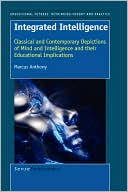
Both Luke and I were quite amazed at the interest in the talk, which was not widely publicised. About 60 people gave up their lunchtime to attend. I spoke about how digital technology and modern education can actually be used to deepen our thinking about the future, and the way we live in the present. I spoke about the way that modern society and education has been accelerating certain kinds of human intelligence (visual/spatial and abstract), while effectively retarding other expressions of intelligence (intuitive and self-reflective). I brought in the ideas of mindfulness (bringing the mind into presence) and Integrated Intelligence (spiritual intuition).

I admit I was a bit worried about how the audience would receive some of my ideas, which are a bit "out there" for mainstream university discourse. After all, almost all of the people there were academics and university workers (there wasn't much publicity for the student body). However the audience was very receptive, and the feedback I got from all quarters was very enthusiastic. The sense I get, and from what people have been telling me, is that many people are now ready to discuss these kinds of things, and there is a general thirst for them in Australia. 

This is one of the reasons why I am going to move back to Australia. I have to say that getting people in Hong Kong and China to listen to ideas like mine has been a real struggle. The general mindset of the population is so tightly focused upon finance, work and (I don't know how else to write this) shopping that there is almost no cognitive space left to consider a more deeply meaningful approach to life. 

I'll briefly mention one contrasting example of a talk I gave at a tertiary institution in Hong Kong. The talk was about how to use the intuitive mind in research and learning. Only four people turned up, and two of them got up and left when I introduced the topic, just a couple of minutes into the talk. Apparently they thought the talk was about something else. The two who were left were actually doctoral students who had chosen me to be their supervisor for their doctoral theses, and had come to meet me for the first time. After the talk both told the school they didn't want me to be their supervisor anymore. 

Unfortunately I have had just too many experiences like this in Hong Kong, and I finally have to admit that my situation there is a bit of an oil and water combination. Hong Kong is a place where efficiency and convenience are king, and the goal of education is to get a qualification and get the hell out of the school. "Education for transformation" (one of my favourite sayings) makes no sense in that intellectual climate. I'm not deluding myself that Western education is a paradise for educators like me, but it is further along the road.

I have long written about the importance of following your heart in making decisions. Recently a lot of my spiritual guidance has been reminding me of this. Yesterday I was walking along a street in downtown Byron Bay, and saw a sign for a bookshop, and immediately felt a pull to go in. Inside I found that it was a metaphysical bookstore, and I bought some books. At the counter I asked the older blond haired woman if they did readings there, and she told me they did. So I booked a half hour session. It turned out that the session would be delayed 30 minutes, but I felt a strong sense to hang round for it, and I'm glad I did. The reader, a woman of early middle age named Missy, picked up my situation immediately. It takes one to know one as they say (I do readings myself), and she was very, very good indeed. She tuned into my situation straight away, and emphasised the importance of listening to the heart. Sometimes even inituatives need insight from a second party!

I have to admit I have not listened to my own heart enough with my situation in Hong Kong. I have been getting the "message" to leave for a year or two but have been delaying it. The result is that my own mental state has suffered. That is what happens when you ignore the voice of spirit. But in this instance I'll forgive myself for my stubbornness. 

Better late than never, as they say in the classics.

On Monday I give another talk, this time at the University of the Sunshine Coast, which will be to a much smaller audience - the Futures graduate students at that university.

Marcus

Wednesday, March 23, 2011

Crisis, deep meaning and the opportunity for change


I have failed in my foremost task – to open people’s eyes to the fact that man has a soul, there is a buried treasure in the field, and that our religion and philosophy are in a lamentable state.     Swiss psychiatrist Carl Jung, towards the end of his life

One day, when I was about eight years old, my school principal Mr Suley got up on the morning assembly and spoke from the heart. Now, more than 30 years later, I cannot remember all the details. What I do remember though, was his tone of deep concern. He spoke about war, the environment, cooperation, and simply what it means to be a decent human being. And I will never forget what he said at the end of it all.

“You are the future of this world. My generation has already had a go and we messed it up. You must do better, or we will not be here much longer.”

Of all the things anybody ever said in my schooling days, this was probably the most impactful. Here he was, an older man approaching retirement, and he decided to speak about something more than keeping the playground clean, punishing misbehaviour, or the principal’s old favourite: “Get ready because the exams are coming up.” Mr Suley spoke of life itself, and what it means to be a human being on this planet. They were words of deep meaning, words that moved me. They were moving words because they were not just spoken, but felt. I went through another ten years in the public education system after that, and I honestly cannot recall any teacher or administrator speaking with such impact, or about something so meaningful. This silence always puzzled me.

Mr Suley has probably passed on by now. I heard some years ago that he was involved in a car accident, and that his wife had been killed. I was deeply saddened. It would also have been a tragedy if he had passed up the opportunity of speaking meaningfully on the assembly all those years ago. He may not be here anymore, and maybe he suffered greatly though personal tragedy. But the seed he planted on that day lives on in the man writing this article in 2011.

Many of us can probably remember a defining moment from our younger days when a teacher, parent or elder spoke from the heart and moved us, made us think deeply. But what about public educators today? How many have ever engaged in a discussion or a lesson where they shared something from deep within? The answer for many educators is that they rarely touch upon the deeply meaningful. Why is that? 

At first glance the answer might seem obvious. There is the issue of personal vulnerability. Maybe the students will ridicule or ignore them. Maybe the teacher will offend someone’s religious or philosophical beliefs. And who wants to upset parents in these times of legal accountability? Besides, it is not in the curriculum or syllabus, so why go there?

To go deep requires courage.

Yet (rather appropriately) the absence of meaning goes deeper. To understand why education discourses have become an effective litany of surfaces we have to look at the situation in depth. At the bottom (or perhaps “top” is a better term) of all human experience lies the transcendent, that which connects us to a greater whole, where the boundaries between self and others, individual and cosmos become blurred. And that takes us into the awkward but profound territory of human spirituality.

Yes, the dreaded “s” word. 

To truly appreciate the lack of depth in modern education, media and popular culture, we must examine the way that our society has developed, who controls the dominant discourses, and the ways of knowing which under-gird them. And finally we must take into account the very way in which modern science and education view the human mind and its intelligence.

In this time of shifting global power and economic uncertainty, the restoration of cognitive depth along with associated “right-brained” cognitive processes (including spirituality), is something we can no longer ignore. The reactivation of cognitive depth is a necessity not only for economic and social stability, but for the long-term survival of the human race. The current uncertain global economic climate is the perfect time to begin to initiate change in both culture and curriculum, and expand the ways of knowing that we employ in the society and in the classroom. This is a discussion which lies at the heart of the creation of  Deep Futures – futures that are profound, passionate, engaging, and most of all deeply meaningful. More money, machines and amusement for everyone is not enough. These do not fulfill the human spirit.

Crisis and opportunity often arise together. Will we grasp the chance? Or will we be yet another generation that has failed to take the opportunity, the responsibility,  that we are being given.

Marcus

Sunday, January 16, 2011

Why Sports Games are Decided Before A Whistle Sounds

 Shane Watson celebrates. Yet how much control did he really have?

I have written once or twice about how I believe that the outcomes of sporting events are actually determined before the game is played – at least much of the time. I have had so many premonitions about sporting events over the years that I now know that this is true beyond any reasonable doubt. The only thing that I am undecided about is whether some games remain undecided until some key point in the game.

I don’t have too much time to watch sport these days, but I do have a subscription to an ESPN cricket channel, so have been following some recent games of cricket between Australia and England. The English team is currently touring Australia, playing well over a dozen games. This year I decided to put my Integrated Intelligence  to the test empirically, and see if I could pick the outcomes of the games.

To sense the outcomes, I have relied upon two sources of “data”.

The first is dreams, visions and images which come into my head. Some of these occur independently of my will, such as when I am sleeping. For example, two nights ago, just before Australia played England in a game, I had a brief dream about the game. These dreams almost always occur just before I awaken, as it did on this occasion. The dream was actually a combination of thought, auditory commentary, and some visual images. I saw two Australian players, and the information was that one had played well in helping Australia win, but a second player had batted before him had actually done most of the hard work. He was the one who had won the game.

When I awoke and recalled the dream, the first thing I did was project my consciousness into both the dream and the upcoming game to get an affective sense of whether they represented the truth of what was about to happen. This is the second source of intuitive information I use to sense sporting outcomes, what I call The Feeling Sense (see here for more details about these processes). As soon as I did this, I got a very strong sense that Australia would win the game. It was a very clear and strong signal. There was no doubt in my mind that Australia was going to win the game. That game would start about four hours later.

An interesting thing is that one of the two Australian players whom I saw in the dream (Dave Warner, the one who was going to be the match-winner) was not even playing in the game. So the dream could not be taken literally. Yet what I have learned to trust is the overall energy of such premonitions. The one “law” of premonitions that I was given by spiritual guidance (also in a dream, by the way) some years ago is that precognitive dreams are typically metaphoric and symbolic in nature. To understand them, you have to learn how to decipher their symbolism.

In this sense the precognitive dream is a model of what is about to unfold, but may incorporate both literal and metaphoric elements.

So when I looked at the idea that Dave Warner was going to be the main contributor, my sense was that it actually referred to a very similar player, who was playing in the same position that day (an opening batsman named Shane Watson). If you play close attention to dreams and visions, the literal person in a dream may actually represent someone with a very similar overall energy or consciousness. This is because the psyche recognises energy first, details second.

For me, watching games where I feel I know the outcome is fascinating, because as I watch I can sense what is about to happen much of the time. For example, I just know that there is no chance that a particular batsman is going to be dismissed by the bowler in the immediate future, because there is simply no energy on it. Watching rugby, I can often sense when a side is about to score, because the energy of the score is already present in the current moment. The energy of emotive future events reaches back in time, as was suggested by a recent paper published in The Journal of Personality and Social Psychology.

One of the most interesting things about yesterday’s game was that England batted first, and began smashing the Australian bowlers all over the ground. It was one of the most awesome displays of batting seen in recent times. So, after about a quarter of the game England had nearly 200 runs. For those who don’t know much about cricket, that would be a bit like, say, a basketball team leading 40 points to 5 after the first quarter. For all intents and purposes the game looked to be over, and the Australian team was playing like a bunch of schoolboys. Really, it was one of the worst displays of cricket by an Australian team in recent years. Totally amateurish stuff. The Australian commentators were actually getting a bit agitated by all the errors being made.

And yet, as I projected my consciousness via the feeling sense into the end result of the match, the energy of the outcome remained unchanged. I just knew that Australia was going to win. I found this fascinating – watching a team getting thrashed, humiliated, burned, but knowing that they were going to win in the end. So I did something I haven’t done for years. I stayed at home the whole day and watched all seven hours of the game from start to end, including the lunch break (cricket is a long game!). This would be worth seeing.

By the end of their batting innings, England had scored 295 runs, which is an incredibly high score. Then came Australia’s turn to bat, and no team had ever scored that many runs to win a game at that ground in the history of cricket. I watched with great fascination as the innings unfolded. And yes, Australia did score the necessary runs to win the game right at the death.

As it turned out, that player Shane Watson smashed a record 160 runs, batting undefeated through the entire innings to help Australia win.

I have used this system of sensing the outcomes of games for the last 7 cricket internationals involving Australia and England. I am being completely honest when I tell you I got six outcomes right, but once I was wrong. That one time I felt Australia was going to win the 5th test (game) in the recent series. Austrlia actually got thrashed in that game! The reason (I suspect) is because I had made that prediction four games in advance (yes, I “saw” the energy on the four upcoming games, and got the first three, but not the fourth). It could also be that, as an Australian, I let my personal biases overcloud my judgment. It must also be considered that energy shifts are more likely the further we go into the future. It’s the butterfly effect – small actions taken now effect what will happen down the line. But after making that mistake I went back to picking one game at a time, and have gotten them all right since. Here’s how the games went. There are actually three different formats of cricket, but I won’t bother to distinguish them here).

  • ·         England (huge win)
  • ·         Australia (huge win – few picked it after the first game)
  • ·         England (huge win – see previous point!)
  • ·         England (huge win – this one I got wrong)
  • ·         England (last ball win – quite literally)
  • ·         Australia (very narrow win)
  • ·         Australia (the aforementioned very narrow win after England looked like thrashing Australia early on).

What does all this mean? If you can suspend disbelief for a moment and consider the possibility that we can sense the future, the implications of what I am writing about here are enormous.

Firstly, it means that much – some might say all – of what is happening today – is effectively predestined. Think about it. If what I am saying is true, and you really can sense the results of sports events in advance, then the only question is just how much is actually predestined. Is it only the final outcome? Or is every last detail pre-programmed in advance, including every shot hit, basket sunk or goal scored?

Another possibility is the one I prefer to accept at this point in time. Precognitions – including divinations and The Feeling Sense – pick up probabilities – not the actual event itself. This is the most acceptable hypothesis to me, because, as an intuitive, I receive daily guidance from spiritual sources, including prompts to get me to acknowledge things that I am ignoring, or to assist me in making wise choices. I also ask for guidance about choices I am about to make, and always get some kind of information back in return, even though sometimes it is deliberately vague (Spirit prefers you learn for yourself, rather than be spoon fed, because evolution of consciousness is the prime goal of the “system”). If all events were set in advance spiritual guidance would be pointless.

In many ways, the spiritual journey is one of moving from unconsciousness – automatic and conditioned egoic responses – to full awareness of what drives our choices. This includes a movement from what we imagine is the reason for our choices, to the actual reasons. The ego is a trickster. It often believes it has control, when in fact it may have little or none.

Given that much of what is about to unfold is inevitable, and that we can receive guidance regarding what to do about it (including the choices we have available) I believe the best approach reality – to life - is to relax into the moment wherever possible, free from the chattering mind. This is where Integrated Intelligence is most reliable, where we can sense who we truly are at a spiritual level, and where awareness of the forces pulling upon us is most readily perceived. And this is not to even mention the fact that the present moment is where we free ourselves from the ego and its chattering monkey mind.

It’s worth some reflection.

Marcus