It's the future, Jim, but not as we know it...

There's more to tomorrow than robots, flying cars, and a faster internet.
22C+ is all about Deep Futures, futures that matter. Welcome to futures fantastic, unexpected, profound, but most of all deeply meaningful...

Showing posts with label spiritual evolution. Show all posts

Wednesday, January 11, 2012

Carl Jung: Leader-Sage


 Taos, New Mexico recently
It was in Taos, New Mexico and the year was 1932. Two men sat down together on the rooftop of a five-story building overlooking the smaller, square brick buildings nearby. They were surrounded by the rolling plateaus of the Taos, with their volcanic peaks rising high into the heavens. A bright sun warmed the cold winter air. It was to be a most remarkable meeting. One of the two men was a white man of middle age, and his name will be familiar to many readers: Carl Jung, the Swiss psychiatrist. The other man, though largely forgotten by history, was in many ways also remarkable: native American Chief Ochwiay Biano (which means Mountain Lake). The tale of their conversation is recounted in Jung’s autobiography, Memories, Dreams, Reflections. Jung writes that he was able to talk to Biano in a way that he was rarely able to do with Europeans. The most significant aspect of the event remains the comments Biano made about white American culture of the time. He said:
 ‘See how cruel the whites look, their lips are thin, their noses sharp, their faces furrowed and distorted by folds. Their eyes have a staring expression; they are always seeking something. What are they seeking? The whites always want something. They are always uneasy and restless. We do not know what they want. We do not understand them. We think that they are all mad.’
Jung fond this critique of an outsider fascinating. He asked the Chief why he thought white people were insane.
“They say they think with their heads.”
“’Why of course”, said Jung, “What do you think with?”
“’We think here,” said Biano, putting his hand on his heart.
This is revealing. It suggests that there are ways of knowing that have become alien to modern cultures, and to our modern leaders. There are cognitive processes with which the native Americans were quite familiar, but the modern world has largely forgotten. Further, we can deduce from Biano’s strong feelings that he considered that these mental processes were of vital importance in living a genuinely meaningful life.
On that day, the words of Biano also struck a deep chord within Jung. Something moved within him. Yet what fascinates me most about this encounter is what Jung did next. He did not try to psychoanalyse Biano or to critique the contents of his message. Nor did he attempt to situate the Chief’s cognitive abilities within psychologist Jean Piaget’s cognitive scheme of mental development, and explain them away as child-like “concrete operational”. Jung did not even try to write them down. Instead the great depth psychologist fell into a long meditation. In the reflective moments that followed he experienced a vision which revealed to him shocking insights into his own race and civilisation.
For the first time in my life, so it seemed to me, someone had drawn for me a picture of the real white man. It was as though until now I had seen nothing but sentimental, prettified color prints. This Indian had struck our vulnerable spot, unveiled a truth to which we are blind. I felt rising within me like a shapeless mist something unknown and yet deeply familiar. And out of this mist, image upon image detached itself: first Roman legions smashing into the cities of Gaul, and the keenly incised features of Julius Caesar, Scipio Africanus, and Pompey. I saw the Roman eagle on the North Sea and on the banks of the White Nile. Then I saw St. Augustine transmitting the Christian creed to the Britons on the tips of Roman lances, and Charlemagne's most glorious forced conversions of the heathen; then the pillaging and murdering bands of the Crusading armies. With a secret stab I realized the hollowness of that old romanticism about the Crusades. Then followed Columbus, Cortes, and the other conquistadors who with fire, sword, torture, and Christianity came down upon even these remote pueblos dreaming peacefully in the Sun, their Father. I saw, too, the peoples of the Pacific islands decimated by firewater, syphilis, and scarlet fever carried in the clothes the missionaries forced on them.
It was enough. What we from our point of view call colonization, missions to the heathen, spread of civilization, etc., has another face the face of a bird of prey seeking with cruel intentness for distant quarry a face worthy of a race of pirates and highwaymen. All the eagles and other predatory creatures that adorn our coats of arms seem to me apt psychological representatives of our true nature. (Jung, 248-249)
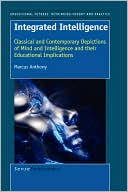
This was remarkable indeed. Jung allowed his conscious mind to move aside for a short time. He allowed something deeper to possess him. And in those moments of receptivity, profound knowledge was given to him, knowledge which allowed him to peer into the shadow of the collective consciousness field of Caucasian civilisation. Jung believed, as do I, that the human mind is embedded within a human collective intelligence, and that this consciousness is directly accessible to us. But to access this intelligence we have to change both the way we see the world and the way we see ourselves. We have to change the way we use our minds. When this happens we begin to tap into Integrated Intelligence.
I draw from Jung’s life journey here as he was a genuine example of what I call a Leader-Sage. He was a man who was able to draw upon Integrated Intelligence to serve the evolution of the consciousness of the human race. He allowed himself to be guided by this process, and in doing so he was able tap into the intelligence of the cosmos itself. Jung was able to develop Conscious Leadership; and my upcoming book Leading with Spirit is devoted to deepening our understanding of the subject. It is also designed to help the readers - the leaders of our futures - to become genuine Leader-Sages.
Marcus

Monday, July 18, 2011

Intuitive Review of Strieber's "The Key" (4) Conclusions


During my recent series of posts on Whitley Strieber’s book The Key, I said that I would write one final post outlining what I feel are some problematical aspects of the text, including things that, according to my own experience, are wrong or limited. I have explored intuitive realms of consciousness for a couple of decades, including undergoing intensive ‘training’ in this area, and developed a high degree of clairvoyant capacity. I’m not going to try to explain or justify that here – you can read about it in my book Discover Your Soul Template (out in December 2011) if you are interested. If you are in a hurry you can now find my self-published version of the book on Amazon.com, under the title Sage of Synchronicity.

There are also a few more interesting truthful statements from The Key that I will also discuss in this blog post. So I will divide this final discussion of the book into two parts, “pros” and “cons”. Again, I have placed a sub-heading above each discussion point for ease of reading, as you may not want to read all of this post.

I prefer a gentle and open-minded approach to life’s big questions, so feel free to add your own insights in the comments section below, or state where you think I am incorrect.

Re-cap and overview of The Key
In The Key Whitley Strieber recounts a slightly bizarre tale of how a stranger burst into his hotel room at 2.30 in the morning, and proceeded to recount the meaning of life the universe and everything. After initially trying to get rid of him, Strieber eventually suspects that the man – whom he comes to call The Master of the Key – is actually relating some profound spiritual knowledge. Later Strieber wrote about the encounter and the Master’s knowledge claims in The Key.

The Pros

The lesson of darkness
The Master says that humanity is in chains, but it is the chains which can teach us freedom:

Love your enemy, for he is your best friend. Without the darkness, you would never know the glory of the firmament… You should bless your jailors, because without them you could never find your freedom. When you, as a species, remember why you have been imprisoned, and you face what you did, you will be free. (no page no.: 50% of the way through Kindle edition)

There’s a lot of truth to this. As I have previously written, the idea of being in chains is an archetypal human motif. In a sense we are all slaves to the limited amount of our innate intelligence that we express and the dark consciousness fields that so many of us are trapped in (despite the fact that most are unaware of their intelligence potential, nor aware of the consciousness fields in which they are entangled).

Learning to love our fear, including the fear of pain and darkness is a key to freedom. To love darkness does not mean to wallow in it or worship it, but merely to accept it for what it is; to hold it close such that we do not need to run and hide from it. It is when we shine the light of awareness upon the darkness that it loses its power over us. Then darkness becomes light. When we try to run and escape from darkness, it overwhelms us.

Intelligence versus consciousness
One distinction that the Master makes is one I have long noted in my own books and writings. He says that while human beings can construct intelligent machines, we are a long way from creating conscious machines.

Intelligence is the manipulator of knowledge, while consciousness knows itself. (56% of the way through Kindle edition)

This observation - relatively simple to any layperson - is the fundamental error that lies behind the transhuman movement – the idea that humans are going to upload their minds onto computers and achieve immortality. (Despite the silliness of this, it would make for an interesting story. Maybe the next of my short stories will deal with this!)

The other major error of the transhumanists is their failure to understand the complex nature of consciousness, and that it is not merely a flat property generated by the physical brain. The non-localised nature of consciousness (extending beyond the brain and into other dimensions) and the existence of the etheric body need to be taken into account. Fascinatingly, the Master touches upon this as he explains how an intelligent machine might be made:

By duplicating the attachments between the elemental and energetic bodies that occur in nature in a purpose-designed machine, a controllable conscious machine can be devised. A living soul attached to a machine will be conscious… (57% of the way through Kindle edition)

This implies a dualist system - mind and brain/machine as separate things - but that in itself is no reason to dismiss it. My experience leads me to conclude that consciousness and the brain are indeed two different phenomena, though intricately interrelated in human life on this planet. It is certainly possible that they may both be an expression of a fundamental underlying construct, but that is purely an intellectualism on my behalf – I have no direct perception of it.

The Master of the Key also says that we need to amplify human intelligence a hundredfold, and that intelligent machines will help in this respect. Fascinatingly, the single event which really launched my own exploration of the frontiers of human intelligence and consciousness occurred about nineteen years ago, when a female spirit guide with long brown hair appeared in my room during light sleep, and passed some important messages to me. She told me that I was using precisely three per cent of my innate intelligence. Since then I have seen that this retardation of our potential intelligence is pervasive right across the human race. I have always maintained that a significant development of Integrated Intelligence can help address this deficit in our innate intelligence. However, the Master indicates that artificial intelligence can also be a powerful boost to intelligence. I have no argument with that, merely to suggest that in order to utilise that machine intelligence appropriately, our spiritual nature must be more fully expressed. As the Master states, we are currently “soul blind”.

Consumerism and death
One other timely warning from the Master is that the consumer society is destructive:

After the suffering you are about to endure, mankind will never again lust after material wealth. You are about to suffocate in your own garbage. (51% of the way through Kindle edition)

Terrible as the metaphor is, this is not an earth shattering conclusion to draw, and I have to concur with the essence of it. It truly amazes me that even as the evidence for the horrendous pollution of oceans, land and air mounts, we are still investing energy into turning the planet into a giant consumer machine. In Asia, almost every nation seems to be following the same insane path to destruction: China, India, Vietnam, Indonesia, Mongolia… Those that follow the path and register high GDP levels are “rewarded” by the economic system. The rest of the world envies their “growth”. Investors from abroad rush in to make a “killing”. Yet these countries are the winners in a loser’s game (as are we all). The irony is that the whole system is rotten. Hyper materialistic futures are what I call “Money and Machines Futures” (as opposed to Deep Futures), and they are “impoverished” futures in the full sense of the word. The filth that is currently being pumped into the rivers, oceans and air in Asia is beyond imagining.

The Master links all this to our having a “death wish”.

People give up on themselves. They do it down deep inside, in places that the elemental mind, that is contained in the brain, cannot access… They do this when they see themselves committing the same errors they have returned to correct. When they give up on ascension, they devote themselves to the ‘acquisition” of material. But what does this really mean – that they can be near coveted objects while they are in the physical? The obsession with material is a symptom of despair. (60%)

The death wish is a genuine component of many a mind. I have found it within my own shadow. Freud was right (and despite the fact that he is out of fashion in mainstream cognitive science, I have seen that Freud was right about many, many things, despite his getting the big picture wrong). The Master may well be correct that the current most common expression of human culture is guiding us towards doom, and that deep down we already know it.

Sin is..
The Master says that sin is “denial of the right to thrive.” Personally, I think this is an excellent working definition of what drives much of human evil. That denial is a function of the desire for power and control over others and nature. But it’s a chicken and egg situation. What came first, the power and control complex, or the rejection of Spirit? My answer is that this problematique represents a dynamic feedback loop, constantly reinforcing itself.

The Cons

Now, let’s take a look at just a few problematic aspects of The Key.

Meditate or disintegrate!
The Master tells Strieber that if a person does not establish a close relationship with the radiant body via meditation or some mindful process, the soul disintegrates and is lost. Personally, I do not feel that this is entirely correct. Firstly, I have had many instances of intuitive communication with relatives of mine who have passed on, including some who I can only describe as “extremely unconscious” – alcoholics, wife bashers, those who committed suicide, the mentally ill and so on (thanks God for the tests!). As one extreme example, my maternal grandmother suffered from Alzheimer’s disease, and barely had a spiritual molecule in her body. Yet I have directly perceived her psyche on numerous times since she died. If anybody was going to “disintegrate”, it would be her! To be honest, sometimes I wish she would disintegrate, as her psychic projections are very difficult to deal with! What I have seen of her leads me to believe that she may be undergoing some healing in whatever space she finds herself in. Thus it seems to be that we can continue to explore and grow even after death, in the space between lives.

However, it is true that if a person’s psyche becomes extremely scattered, they effectively lose control of their minds. They become insane. Healing is then required. Meditation and mindfulness could be extremely beneficial for such people, but it is also true that some degree of medication may be required to get them to the point where they can assume responsibility for their minds. Once a person reaches a certain point of insanity (disintegration), it is very, very difficult for them to come back. I know this from personal experience with relatives. Thus it is better to be mindful before “losing it”, rather than after!

The dead cannot influence the living
The Master states that the dead cannot influence the living, saying: “They have not the knowledge or wisdom to make themselves heard.” (23%). This is definitely not correct in my experience. The dead continue to influence the energy fields of the living, especially those whom they have had strong relationships with while they were alive. For example, my father’s energy still influences me from time to time, as I have not processed all the emotional issues that I developed with him over the years while he was living; and he has certainly not dealt with all his own baggage! Minds tend to become psychically entangled with those whom they have emotional connections to. For example, if part of you is (consciously or unconsciously) angry at your late mother for her failure to adequately love you, chances are you will retain strong psychic links to her after her death. In some cases such psychic links can be quite destructive, if these issues between the living and dead are intense.

Compassion is giving to others

The Master says that compassion is;

Finding what others need the most and giving it to them…In a (compassionate) world, it is everybody’s duty and delight to find what every other they come into contact with needs most from them, and give it to them.

I think that there is a profound truth in this, and selfishness and narcissism have become real problems, right across the world. Nonetheless, there is the potential for the Master’s definition of compassion to be used in a self-limiting way. Many people do not know what their spirit needs, and simply giving them something they think they want may be assisting them in a self-stultifying behavior. One must exercise discretion, and not simply submit to the will of others’ demands.

The other factor here is that the act of spiritual empowerment is “selfish” in a certain sense of the word. Seekers has to be vigilant in the refusal to submit to the control and power that others attempt to exercise over them. Many others will not understand the journey you take, so saying “no” to them is crucial.

Escaping the earth
There is a recurring theme in The Key that “escaping” the earth is crucial to the survival of our species. For example, the Master says:

Your enemy does not want it to end. They fear you too much. When you see UFOs, you see prison guards. They also act within your society to confuse you about your own past, and to prevent progress in areas such as propulsion, which might enable you to spread into the Heavens. This is all done to prevent you from escaping. (49%)

Perhaps this is true. Yet my own understanding is that enlightenment – “Heaven” if you like – is already here on Earth, right now. We just have to allow Heaven to descend by seeing through the delusions of the mind, and its constant attempts to escape the present moment by moving attention to a non-existent future or a (distorted) remembered past. One of the prime delusions of the mind is that it can escape. The truth is there is no escape. There is no better “up there and beyond.” Again, this is one of the aspects of the text that I feel have been somewhat distorted by Whitley Strieber’s personal issues. And it is an absolutely crucial one. Enlightenment happens here and now, or it never happens.

Conclusion
Despite imperfections, The Key has more than enough stimulation, and more than enough useful information to make it a very worthwhile read for many spiritual seekers. It does not offer any simple solutions, nor offer a definitive roadmap forward. Does this reflect the Master’s lack of desire to spoon feed us? Or Whitley Strieber’s imperfect rendering of his message? I shall leave that for the reader to determine.

Let me just end this post with a quote from the book which sums up for me why this book is well worth reading and contemplating. Strieber writes:

The Master of the Key offers clarity where there is now confusion, and if one is open to his message and the new ideas it contains, unexpected vistas of discovery present themselves, as one is led toward the promise of new knowledge, where questions beckon that are as yet scarcely imagined among us.

I am not sure that the Master’s message is always clear, but he certainly does invite one to open up to new vistas of knowledge, while pointing the reader in directions that are, in my humble opinion, well worth exploring. Finally, one statement of the Master‘s is well worth meditating upon.

You human beings are right on the edge of becoming a conscious species. That is why we are here. We’re midwives to your birth.
            
The Master of the Key says that the fate of humanity will be decided in the next 100 years. There will be, he says, sudden and massive catastrophic changes. If that is correct, it is all the more reason why all of us need to pay careful attention to the voice of Spirit within and beyond us.

Marcus

Sunday, May 29, 2011

First Causes and the Council of Light


I’m a little busy this week preparing for an important job interview in Australia later in the week, so I won’t be writing too much here for a while. I’ll get back to writing more of Light after that date.

But here’s an interesting thought for the day. It is mentioned by Eldon Taylor in his book Mind Programming. It is this;

First causes are not provable.

A first cause is a foundational concept, principle or structure that one believes to be the basis of reality. 

Taylor is right, if you think about it. Mainstream dominant science begins with the first cause that matter is the basis of the universe, and that it began from nothing via the Big Bang (although this theory is being hotly debated at present). But how would one actually prove that matter is the founding basis of reality? What experiment would one conduct? The answer is that there is none. Thus the “matter is foundational” principle of science is actually metaphysics. 

In the Eastern idealist tradition, consciousness is believed to be the foundation of the cosmos, with matter being an emanation of cosmic mind. This is also metaphysics, in that no experiment that I know if could prove it.

One might then logically question how any foundational principle might be considered more correct or superior to another. What if I said Uri Geller created the universe while in a particularly bad mood. There’s no way to prove or disprove that.

With the scientiifc method, peer review essentially determines what “facts” are real or not real. It’s the best system we have, given the current typical level of human consciousness evolution. However I believe that in time scientific peer review will evolve in to Wisdom Council review which incorporates other ways of knowing, including direct spiritual perception or Integrated Intelligence. This claim I make is in itself based on personal perception, and from direct experience working with people with advanced levels of consciousness. I have seen how decisions can be made via a collective employment of Integrated Intelligence. 

The Wisdom Council will eventually happen, once the veneer of scientific materialism is stripped away, and begins to evolve into a more deeply conscious understanding of the universe and the humanity’s role within that universe.

This Wisdom Council process will most likely go through various phases of evolution, as initial attempts to work with such consciousness will inevitably be contaminated by the ego projections of its members, and interference from external consciousness fields (individuals with malevolent intentions, collective consciousness fields, alien and discarnate influences. In my working with groups I have seen the way that the consciousness fields of the individuals involved can become entangled. This is because there is almost nobody – least of all me – who is beyond some degree of influence from the power and control agenda of the ego. This agenda is what gets people ensnared in other people’s energy fields.

I suspect that in time, whatever Wisdom councils forms will learn from the mistakes that are made, and in turn will deepen in consciousness. Ultimately the “drama” will be minimised, and eventually completely eradicated. It will then become a true Council of Light. The Council will be able to form a kind of "peer review", helping humanity decide the what realities and truths to pay heed to. By that point human beings will be far more "transparent" than they are now, and people will be able to sense lies and deception more readily. So the chances of people giving their power away to the Council will be minimal. Still, it has to be admitted that the current "self-made man" culture of some modern western nations will find this idea an affront to their dignity. Yes, it will involve a surrender to something greater than the self. This will be perceived as a loss of power by the ego, despite the fact that it is actually the opposite.

All that however, is a long, long way off. I can’t prove any of it, and won’t try. You might like to consider all this a provocation – something to stir the imagination.

Marcus

Sunday, January 2, 2011

Manipulation, Control, and the Spiritual Mind


Conscious Transparency: Control and manipulation

In my next few series of posts I am going to write about some of the ways that developing Integrated Intelligence, or INI  and conscious transparency can assist in your personal evolution, and that of society in general. Conscious transparency is the greater awareness of information both within and beyond one’s own mind, including the workings of the human ego (which tends to be deceptive). Each post will deal with a specific problem in work, education or living in today’s knowledge economy.

In this first post I am going to deal with an obvious feature of today’s hyper-capitalistic world: the manipulation and control by governments and corporations.

Within the knowledge economy, individuals are extensively and continually controlled and manipulated. There is an agenda to shape individuals to fit into the societal machine. As late educator James Moffett pointed out in The Universal Schoolhouse, this manipulation process often contradicts the desires and needs of the individual, and especially the calling of his/her spirit. Thus, the State and/or corporate power structures may suppress not only ego-centered drives, but spiritual ones also. While selfish behaviours (ego) might be considered negative, the latter spiritual urges may be seen as assisting in the overall evolution of consciousness in the society. There is therefore in modern societies an unintentional muffling of greater human and social development due to the system’s requirement for short-term control of the human ego

Education has become part of the consumerism and materialism of the modern age. The ‘corporate takeover’ of education can be traced back to a wider social problem. Critics have pointed to the powerful controlling influence of mainstream establishment culture David Loye equates this “Establishment” with the paradigm of the “Pseudo-Darwinian Mind”:

Arising during the twentieth century, this is the control of the masses and a widespread, passive, and compliant academic elite through the possession of television, publishing, and practically all other media by an economic and power elite, which finds in old-style survival of the fittest, selfishness uber alles Darwinism the legitimizing or excuse it proffers from and pays for in science (David Loye, from The Great Adventure).

Tuesday, June 8, 2010

The Greatest Gift (2)


The video from my last post got me thinking about personal futures. We are under so much pressure from society to conform to dominant ideas about what an ideal life should look like. A recent book by Maggies Hamilton, called What’s Happening to Our Boys , suggests that boys as young as eight years of age are obsessing about their image, and advertising, consumerism and IT culture lie behind the problem. There are primary school students who are worried about what they were wearing to school, while some teenagers are scared to take their shirts off at the beach because they don't have abs. The problem is thus more acute than ever.

Here’s what the Sydney Morning Herald story noted about the problem.

Some of this is because marketers are recognising boys as the last great untapped market.
"Parents are very worried about not looking cool," she (Maggie Hamilton) says." Advertisers have ... done an effective job in undermining parents' confidence, leaving them constantly worried they're inadequate and/or uncool unless they are buying this or that," she says in her book.
Australian parents spend around $1000 per child per year on toys and related products for kids aged zero to three, Hamilton says.
Her book quotes James McNeal, a Texas-based professor who has published books on children and marketing, as saying that consumer behaviour patterns start at 16 weeks of age.
Meanwhile, the former president of children's clothing retailer Kids-R-Us, Mike Searle, is quoted as saying "if you win this child at an early age, you own this child for years to come".
Kids are basically growing up in rooms full of branded junk watching DVDS over and over," Hamilton says.
"The kids associate (branded toys) with the character they have seen in the DVD ... they don't even have an imaginative repertoire around those characters. What they do is replay the stories they have seen over and over on the DVDS."
Boys' natural attraction to computer games and gadgets means that many are missing out important interaction with not only other people, but the outside world, Hamilton says.
"Our kids are becoming like battery hens, they rush home and it is into the bedroom, onto the computer, iPod in the ears and all that wonderful activity that was going on outside is now happening on the screen," she says.

Tuesday, May 18, 2010

Should we Pursue Psychic Development?


 Recently I have had some extraordinary experiences. I will relate one or two of them here. But the more important question is, should we pursue psychic experiences for their own sake?

If you have read a few of my blog entries here, especially those about Integrated Intelligence, you might be forgiven for thinking that I am an advocate of psychic development. After all, Integrated Intelligence is basically harnessing certain cognitive functions that would normally be classified as psychic or paranormal by mainstream science and media. And I have referred to some rather extraordinary experiences I have had over the years, including sightings of UFOs, out of body experiences, precognitions and so on. These experiences can be useful, and point us toward the destination, but they shouldn’t be confused for the goal.

Many popular spiritual and New Age books also use references to paranormal events as a means to entice their readers/viewers. On the back of one of Stuart Wilde’s recent books, for example, there is a reference to someone dematerialising and walking through a wall.