DEEP FUTURES:
Possible, preferred and alternative visions of tomorrow. Now.
It's the future, Jim, but not as we know it... There's more to tomorrow than robots, flying cars, and a faster internet. 22C+ is all about Deep Futures, futures that matter. Welcome to futures fantastic, unexpected, profound, but most of all deeply meaningful...
Lawrence LeShan’s A New Science of the Paranormal is a very readable and excellent tome, which seeks to address the way forward for research into the paranormal and fringe areas of consciousness research. Lawrence LeShan is a veteran researcher in the field, and at just 125 pages, this book makes for a quick, enjoyable and thought-provoking read.
As with my other intuitive reviews, I will take a look at not only the explicit knowledge detailed in the book, but I will also add my intuitive insights into the writer, and the way his psyche has helped shape the book. I am a spiritual counselor, so in this process I apply a similar process to that which I apply when counseling people: I intuitively glean information from the psyche – in this case that of the writer. It shouldn’t surprise you then, that I am a “proponent” in the so-called “psi-wars.”
In A New Science LeShan argues passionately for the argument that the paranormal is crucial to understanding our place in the cosmos. Contemporary science and philosophy have created an extreme distortion of experience which alienates us from our spiritual roots, and psi experience can help redress that imbalance. I am reminded of Susan Blackmore’s 1996 paper “What can psi teach us about consciousness?” Blackmore concluded that it can teach us nothing, basically because it doesn’t exist, and especially in lieu of her belief that consciousness does not have agency. LeShan’s and Blackmore’s perspectives are diametrically opposite, yet the question is crucial. Let me then be clear. My long experience in working with the intuitive mind leads me to conclude that LeShan is correct. Blackmore’s position, although supported by mainstream establishment thinking in science, is simply wrong. As LeShan states, this is a question of monumental importance, and I believe that A New Science is a little step in the right direction. LeShan calls the quest to understand psi “a terribly important adventure” and “the wild card in our seemingly hopeless attempt to get the human race off the endangered species list.” (p. 18)
LeShan lists four definitive ways “psychical research” can help move us forward. The following outcomes might occur if “the existence of large-scale psi events becomes part of the background assumptions in our culture.” (100)
1.The idea that we are separate, isolated entities will change.
2.We will see ourselves both as individuals and as part of something much greater. This is in line with the teachings of many spiritual traditions.
3.As a result of the first two points, the way we behave towards each other and the planet will change.
4.These changes will be of a significant scale, such that they will help the human race survive its current critical evolutionary impasse. (p. 101)
These are all positive outcomes which I concur can happen. However... (click below to read more)
Behind die-hard skepticism lies a fear of loss of control, of the feminine, of annihilation and ultimately rage at the universe itself. Extreme skepticism is thus a projection.In this video I use a channeling process to connect with the consciousness of skepticism as a collective mind. Behind much of human behaviour, and lying embedded within all written, visual and verbal information there are consciousness fields which can influence perception. They are typically invisible and unconsciousness, but influence both the information being conveyed, and the way the perceiver receives that information.
"Connecting with the field" is a process I learned from working with spiritual teachers in years gone by. You can learn more about it in my book Sage of Synchronicity.
Sorry for the lack of posts of late - I've been a bit busy! I have recently returned to beautiful Discovery Bay on Lantau Island in Hong Kong. I am also back working my full-time job as a secondary school teacher, even while polishing up these futures projects.
I'm working with my editor on getting my book Sage of Synchronicity ready for its release with Inner Traditions next year.
I'm finalising the booklet Urban Enlightenment, and the programme associated with it. That programme will be run in Hong Kong, over four weeks in November. I'm quite excited by that one, as it is a potentially life-changing event for participants.
I am also working on developing a 'learning how to learn' programme for high school students in Hong Kong. Hong Kong kids are smart, but don't always have exposure to a wide array of learning skills. They can get caught up in the rote-style of learning that tends to dominate in schools, and this can have a disastrous effect of their developing the life-long learning habit that is so essential in the modern age.
There is at least one more programme I'm developing. Recently HK tycoon Li Ka Shing decided he didn't need HK$300 million anymore, and has developed a great way to get rid of it - the "love ideas/love Hong Kong" campaign - www.loveideas.hk . I'm going to be submitting at least one programme, and I hope to be working with a few other wonderful people here in HK.
So you may not see so many long posts here in the immediate future, with my being so busy. However, I do promise to keep posting on a range of topics, although sometimes there may be only a little commentary, and a link to something worth noting.
Here's something that I found to be short, sweet, and fascinating. It's an easy-to-understand entry on Dean Radin's blog, and explains how one of the most famous experiments in parapsychology is undertaken. It's called the Ganzfeld, and involves a person being blindfolded and fed 'white noise'. Then the person has to try to guess what someone else is trying to send him/her via telepathy, from another location. It's worth checking out, for those who have always wanted to know how they do it - and perhaps why these kinds of experiments are criticised by skeptics. See if you can pick the correct card from the description!
“The state of empirical psi research continues to advance while the state of skepticism continues to stagnate. It doesn't take precognition to guess who will eventually win that type of debate. How long ‘eventually’ will be depends on how many people are actively engaged in research.”
Last Saturday evening I was walking past a bar in the Central district of Hong Kong, when I noted a game of rugby on the flat screen TV inside. Now I’m a bit of a rugby fan, being a former player, and since the game was between Australia and the New Zealand All Blacks, I ducked inside to check it out. To my great delight I saw that the game was already in the second half and that Australia was leading 22-9, with just 30 minutes to go. As an Aussie, this was too good to miss, so I sat down and ordered a glass of red wine as a pre-celebration drink for the impending great Aussie victory over the mighty All-blacks. A few minutes of viewing allowed me to see that Australia was dominating the game, and the All-blacks were being run all over the park. The NZ team looked like a complete rabble, like a ship without a captain. On the other hand Australia looked very sharp. They looked certain winners, for to lose it would require a roughshod NZ team, who had been completely outplayed, to score two converted tries in the last 15 minutes.
At that point I did what I often do when watching sporting events. I measured the energy on the outcome using the Quick Check. I have found that this divination method is extremely reliable for picking the outcomes of sporting events (although if I am ‘following’ one of the teams, I sometimes get over-excited and get the reading wrong). I didn’t get the reading I expected or wanted. There was no ‘energy’ on Australia winning the game.
Allow me to backtrack a little.
The first time I realised that sporting events are actually determined before the opening whistle is even blown, was when I had a dream during the 1991 rugby world cup. One night during that time I had a dream where I saw the English captain Will Cahling being interviewed and thanking his supporters for the tremendous victory they’d had. The next day I learned that England were playing Australia, so I stayed up to watch the match with my flatmate. Even though at that time I had not really developed none of my ability in Integrated Intelligence, I felt strongly that the dream was a precognition. As the match progressed, Australia took the lead, and stayed there. In the final minute of the game, Australia was leading by one or two points, and they had the ball in hand (which means England would not be able to score). I told my flatmate that Australia would lose the ball and England would win. Well, I was only half right. An Australian player decided to kick the ball, and England took possession. It was literally the final second of the game, and he was on the half way line, way out near the sideline. I watched bemused as he ran backwards (away from Australia’s tryline, where he was supposed to be running!), suddenly pivoted, turned round, dropped the ball onto his foot. The dropkick straight sailed over the goal posts from an impossible position. Never looked like missing.
The full-time siren sounded. England had won. There followed a few ads, then Will Cahling appeared and thanked the English supporters, just as I'd 'seen' the night before. (As an aside, my flatmate was a die-hard science graduate and skeptic, and refused to accept that my prediction had been anything more than good luck, after I told him how I ‘knew’. I was a skeptic too at that time – but an open-minded one).
Another precognitive vision of a sporting event which I had was symbolic (in fact many precognitive dreams occur in symbolic form). It occurred just before the 2004 cricket world cup. Australia went into that competition as the reigning champions, but had lost a lot of games, including a warm-up game against a low-ranked team, and many people wrote them off. However, I had a dream which convinced me they were going to ‘wipe the floor’ in that competition. As I was half asleep thinking about the competition one night, a vision came to me of a giant wild boar, running towards the tryline on a rugby field. The image was of an unstoppable force (imagine being a rugby player and trying to tackle a great boar charging towards you!). I just knew that the boar represented the energy of the Australian team, and that it symbolised their path through the upcoming competition. The vision was true. Australia smashed all other nations and went through the competition undefeated.
I have also had many premonitions involving my participation in sports events. One Saturday morning about 15 years ago, when I was to play a game of rugby, I awoke and heard the song “You go and save the best till last” being blasted into my head (I often hear these songs to this day). I felt strongly that it was to do with the game I was going to play. When I got to the playing field I was very disappointed to find I had been put on the reserves bench. I was a bit pissed off to tell you the truth, but remembering the song I had heard that morning, I decided to be patient and kept my mouth shut. I waited, and waited... Half time came and went, and the game was drawing to a close. Then with just two minutes left the coach threw me onto the field on the wing (which is where I played anyway). I had barely run on, when our half back made a short break in our own half. Bypassing my two inside centres, he sent a long cutout pass to me, perfectly timed, such that I was into open space. I ran the thirty metres or so to the line without a hand placed on me, and scored. There was no time for a restart, and the game was over. The best had indeed come at the last moment.
After I was taught the Quick Check, I became able to predict the outcome of most games before they even began. Or even during games. I remember that during the 2005 soccer world cup, I rang my wife, and she said she couldn’t talk because she was watching a game, and they were having a quick penalty shoot-out at the end. I did a Quick Check and told her Korea would win the shoot-out, and that she needn’t bother watching. I was right.
So, last Saturday as I watched the Australia/New Zealand game, I was somewhat shocked to ‘read’ that there was no energy on Australia winning the game, despite their dominant position with the minutes counting down. Sure enough though, New Zealand scored two late converted tries, and completely against the run of the game, ‘got out of jail’. They won by one point, 23-22.
I now know that most, if not all sporting events are determined before a ball is kicked, hit or touched down.
Even the specifics of individual plays are largely determined. One morning when I was to play a game of cricket, I awoke, and the number ‘26’ appeared in my mind’s eye.
And while I'm a on a roll... I had ten hours on the train from Geneva to Berlin today. I went through some truly beautiful countryside, especially in Switzerland and southern Germany. The train was very cozy, and I managed to squeeze out this little tale. It's not so much about the future, but touches upon some of the themes I regularly write about. There's a little bit of the paranormal, an invitation to step into the unknown, and even a little sexual tension. And no, this blog is not going to become a short story blog. I will simply post fiction, and maybe even poetry, here from time to time.
A Lucid Mind
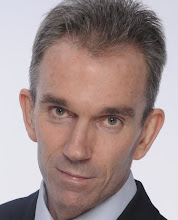
By Marcus T. Anthony
“Relax Miss Lee, this won’t hurt a bit”, smiled Martin Ku as he ushered the pretty young woman to her seat.
“I certainly hope not”, she smiled back. “They aren’t paying me enough for that.”
“Hmm, we have something else in common then, besides, our distant ancestors in the Far East”. Dr Ku sat down at his desk, some distance from the woman. “So how long has it been since you were in Shanghai?”
“Haven’t been back since we left when I was six years old. I can barely remember anything,” Veronica Lee confessed. “What about you?”
“I hate to say, but I have never been to China. I’m third generation Chinese American. In fact my mother was only half Chinese.”
“Oh, I thought there was something a little mixed up about you the first time I saw you.” Veronica giggled.
“Too right, Miss Lee. I can’t speak a word of Chinese either. I’m as American as a hot dog at Yankee Stadium.” Dr Ku shuffled his papers. “I’d love to chat some more, but I am on a tight schedule today. I assume you are aware of the procedure?”
“I believe I’ve been told just about everything.”
Dr Ku picked up a large, thick envelope. He removed the string around it, and pulled out what looked like an oversized deck of cards. “It’s quite simple really. On the back of these cards there is a single number between one and ten. I’m going to pull one card out at a time. Your job is to guess the number on the card I am holding. Got it?”
Just a few months ago on his blog, parapsychologist Dean Radin boldly claimed that the idea of entanglement will soon become taken for granted in biology. Entanglement is the idea that all things are connected at a deep level, and that this connectivity transcends the currently understood limits of space and time, as held in mainstream science. In the post, titled “Quantum biology now. Quantum psychology next?”, Radin suggests that psychology will quickly follow suit, taking on entanglement as a founding principle of mind.
Dean Radin
Radin has long held the belief that entanglement will eventually be embraced in science, but his confidence received a boost at the beginning of the year because of a paper published in the prestigious science journal, Nature by Elisabetta Collini and colleagues.